Daily digest
Today in AI — Thursday, November 26, 2026
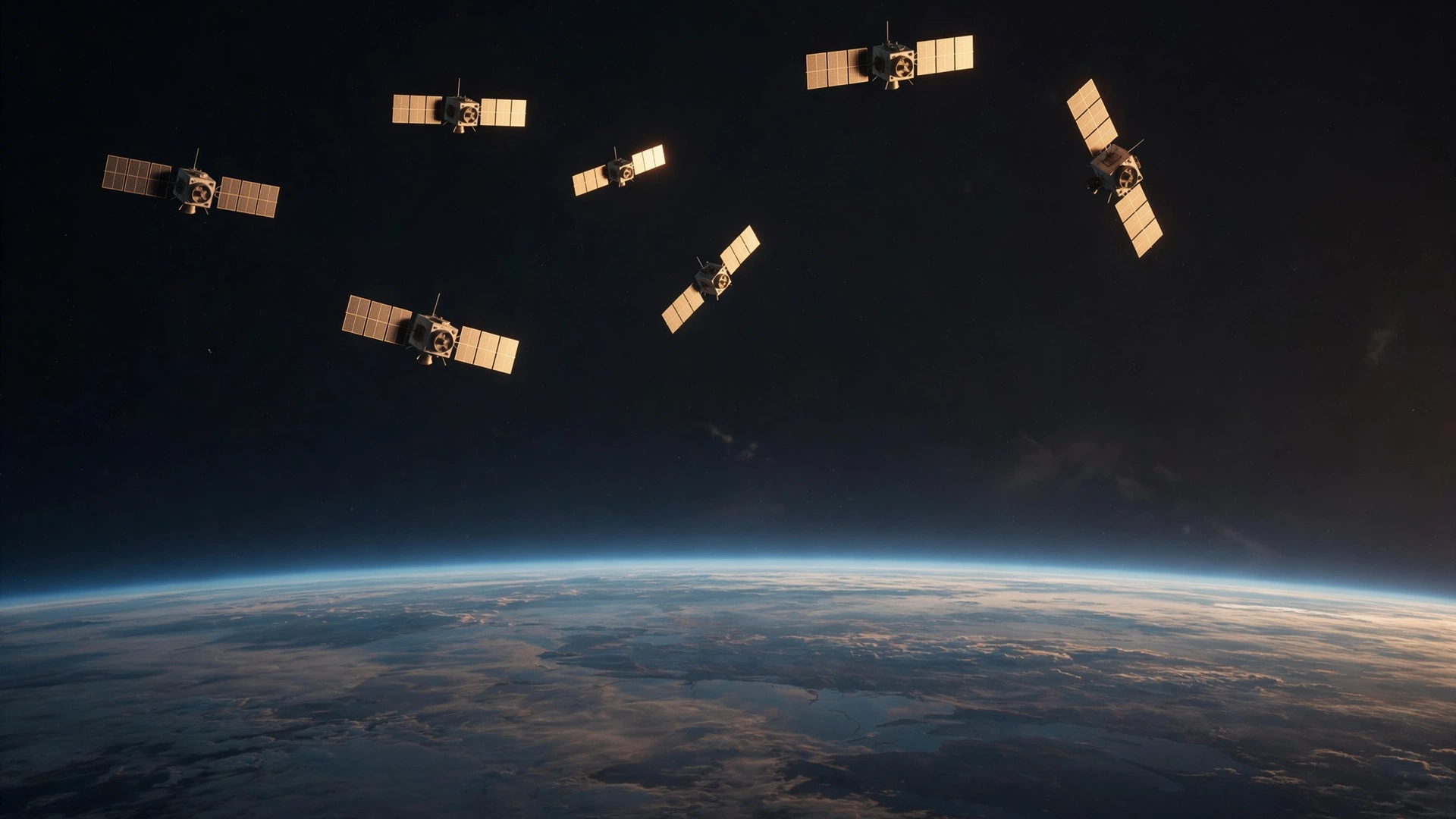
FCC clears SpaceX to launch a million AI data-center satellites
The FCC has authorized SpaceX's Starmind constellation: up to one million satellites that would work as orbital compute modules, processing AI workloads in space and sending the results back to Earth. The licence is the first of its kind, but it comes with deadlines — a first satellite by 2033 and the full million by 2040 — and astronomers are already raising alarms about debris and the night sky.
Why it matters: the AI compute race is now a space race — if data centers move to orbit, the bottleneck shifts from land and grid power to launch capacity and orbital regulation.
Source: NPR Illinois / AP
Anthropic let Claude rewrite its own API in Rust — then made the live API prove it worked
Anthropic moved the Messages API — the path behind every Claude request — from Python to Rust, with Claude writing the first version of the core request path in about a week. The hard part was proving parity: the team shadowed live production traffic through both versions and dispatched agents to fix every difference, landing a Rust API that uses about 70% less CPU per request and answers about 20% faster, with no downtime and no freeze on feature work.
Why it matters: generation got cheap; verification is now the bottleneck — the same reason the agents in this house ask before they act. Anthropic's shadow-traffic harness is the pattern to copy for any production migration.
Source: Anthropic
A 27-billion-parameter coding agent now fits in 5.9 GB
PrismML released Ternary Bonsai 2.5 27B, a ternary-weight version of Qwen3.8 27B that keeps 90% of its full-precision parent's agentic coding scores — 75.6 on SWE-bench Verified, up from 60.8 — in a 5.93 GB file under the Apache 2.0 licence. It runs through llama.cpp on GPUs and Apple silicon.
Why it matters: a serious coding agent that fits on one consumer GPU changes what runs locally — the same llama.cpp setup already serving Qwen on the rig and the Mac mini could run this tomorrow.
Source: PrismML
GPT-6 designed proteins that bound their targets in the lab
OpenAI reports that proteins designed by GPT-6.2 showed evidence of binding to five targets in laboratory tests run with research partner Onava — 35 of 322 tested minibinders bound, at least one per target. The results are in a preprint, and specialised biology models still supplied the amino-acid sequences, so this is a general model doing design work inside a hybrid workflow, not alone.
Why it matters: a general-purpose model designing molecules that work in a wet lab moves AI in science from prediction to invention — and the preprint, not peer review, is still the evidence, so treat the claim as promising, not proven.
Source: OpenAI
Claude artifacts can now install as real desktop apps
Anthropic's "Install as app" beta lets any Claude artifact become a Mac or Windows app with its own icon and window — no packaging, signing, or API key needed. Installed apps can send notifications or sit in the menu bar, and each one asks permission before touching the computer, with a full-access tier that can run programs and edit files.
Why it matters: the describe-it-and-ship-it loop from the 40-apps build is now a native Claude feature — a prototype can become a desktop app in one click, which is exactly how small tools should be born.
Source: Claude by Anthropic